TL;DR: Biohazard cleanup in Freeport, FL typically costs between $500 and $15,000 or more. A contained blood cleanup in one room sits at the low end. An unattended death with extended decomposition, saturated flooring, and biomedical waste disposal fees sits at the high end. The biggest cost drivers are how much time passed before cleanup started, how many porous materials (carpet, subfloor, drywall) need to be removed, and the square footage affected.
If you’re staring down a cleanup after a death, an accident, or a violent crime in your home or a rental property, you don’t need a lecture on biohazards. You need a number you can plan around and a sense of who’s going to pay for it. This guide lays out real cost ranges, what pushes a job to the higher end, and how Florida insurance and victim compensation actually work in situations like this.
How Much Does Biohazard Cleanup Cost in Freeport, FL?
Most biohazard cleanup jobs in the Freeport area fall between $500 and $10,000, with severe or delayed-discovery cases running higher. The exact number depends on the scope of contamination, the materials affected, and whether waste has to be professionally transported and disposed of.
Here’s how that breaks down by scenario:
| Scenario | Typical Cost Range |
|---|---|
| Blood cleanup, single room, discovered promptly | $500 - $2,500 |
| Trauma scene cleanup, multiple surfaces or rooms | $1,500 - $5,000 |
| Unattended death, decomposition under 48 hours | $3,000 - $7,500 |
| Unattended death, extended time elapsed | $6,000 - $15,000+ |
| Crime scene cleanup with porous materials removed (carpet, drywall, subfloor) | $3,000 - $10,000 |
| Biomedical waste disposal and transport fees | $300 - $1,500 |
These are typical industry ranges, not a quote. Every scene is different, and a company doing this work the right way will give you a written scope before touching anything.
What Drives Biohazard Cleanup Pricing?
Three factors move the price more than anything else: how many porous materials are affected, how much time passed before cleanup began, and the total square footage involved.
Porous materials, carpet, padding, subfloor, upholstery, and sometimes drywall, usually can’t be sanitized once bodily fluids soak in. They get cut out and disposed of as regulated waste, which adds both labor and disposal cost. Time matters because decomposition and bacterial growth don’t pause. A scene addressed within hours costs far less to remediate than one discovered days later, when fluids have had time to penetrate flooring and subflooring and odor has set into the structure.
Square footage matters less than you’d think for small, contained incidents, but it scales fast once a scene spans a hallway, a stairwell, or multiple rooms. Add biomedical waste disposal fees (regulated by the state and billed per load or per container) and you get the spread in the table above.
Crime Scene Cleanup vs. Trauma Scene Cleanup: Is the Cost Different?
The cost difference comes from what happened, not from which label a company uses. “Crime scene cleanup” and “trauma scene cleanup” describe overlapping work, blood and bodily fluid remediation after a death, injury, or violent incident, and pricing follows the same drivers: porous material loss, time elapsed, and square footage.
A violent crime scene with forensic activity (evidence processing, multiple rooms, law enforcement involvement) often runs toward the higher end simply because more materials get affected and more time passes before cleanup can legally start. An accidental injury cleaned up the same day tends to land at the low end regardless of what you call it.
Is Biohazard Cleanup Billed by the Hour or by the Job?
Most reputable companies price biohazard cleanup as a flat, scoped job, not an hourly rate. A written scope should list the materials being removed, the square footage treated, waste disposal fees, and a total price before work starts.
Be cautious of a company that only quotes hourly labor with no cap. Biohazard work can involve unpredictable labor hours (extraction, demolition of affected materials, deep cleaning, and deodorization), and an open-ended hourly rate makes it hard to know what you’ll owe at the end. Ask for the scope in writing and confirm whether waste disposal is included or billed separately.
Does Homeowners Insurance Cover Biohazard Cleanup in Florida?
Many homeowners and renters policies cover professional cleanup after a sudden, accidental event, but coverage is not automatic and depends heavily on the specific cause and your policy’s wording. A death from natural causes, an accident, or an act of violence by someone other than the policyholder is more likely to be treated as a covered loss than a situation tied to long-term neglect. According to the Insurance Information Institute, standard homeowners policies are built around sudden and accidental losses rather than gradual ones, and that same logic generally applies to biohazard claims.
For rental property owners, a landlord policy may cover cleanup after a tenant’s death or a crime on the property, but check your specific policy form since coverage varies by insurer. For victims and families dealing with a violent crime specifically, Florida’s Attorney General’s Bureau of Victim Compensation is a separate avenue that can help offset cleanup costs for qualifying crime victims, independent of homeowners insurance. It’s worth asking about regardless of what your policy says.
Whatever the payer ends up being, document the scene with photos before cleanup starts, keep every receipt and the written scope of work, and get an itemized invoice. That paperwork is what an adjuster or a victim compensation reviewer actually needs to process a claim.
What Happens During a Biohazard Cleanup?
A professional biohazard cleanup follows a set sequence: securing the scene, assessing contamination, removing and bagging affected porous materials, cleaning and disinfecting hard surfaces, and deodorizing the space.
- Scene assessment. The crew identifies every surface and material affected, not just what’s visible.
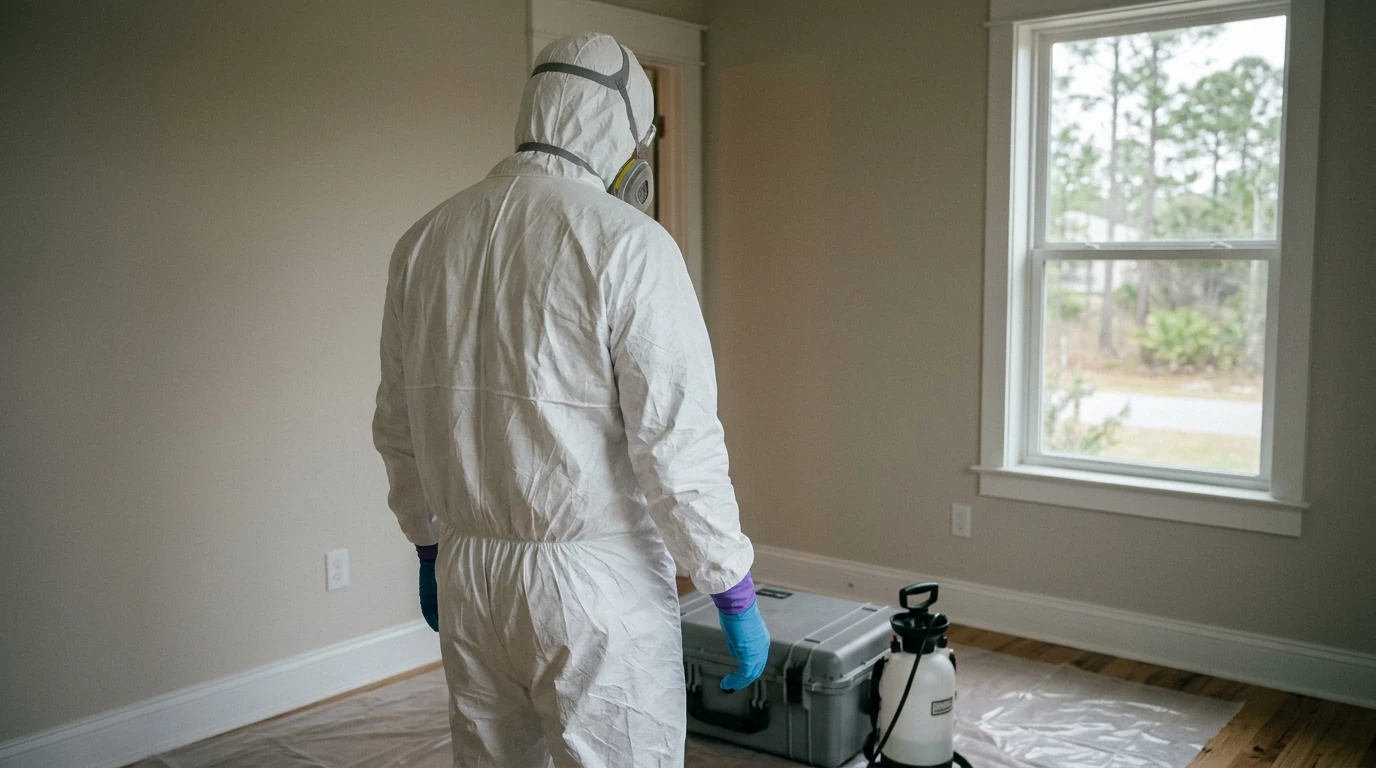
- Containment and PPE setup. Technicians suit up in full protective equipment before any material is disturbed, per OSHA’s bloodborne pathogen standard, which governs safe handling of blood and other potentially infectious materials.
- Removal of non-salvageable materials. Carpet, padding, and other porous items that absorbed fluids are bagged as regulated biomedical waste.
- Cleaning and disinfection. Hard surfaces, framing, and subfloor are cleaned and disinfected according to the scope.
- Deodorization. Odor-causing residue gets treated, often with an air scrubber or ozone equipment, since surface cleaning alone doesn’t always resolve odor from fluid that penetrated materials.
- Waste transport and disposal. Regulated waste is transported and disposed of through a licensed biomedical waste pathway, not a regular dumpster.
What Should You Ask Before Hiring a Biohazard Cleanup Company?
Ask directly how the company handles biomedical waste disposal and whether it’s registered with the state to transport it. Florida regulates trauma scene cleanup providers that transport biomedical waste under state health department rules, and a company’s answer tells you a lot about how seriously they treat the legal side of this work.
Also ask for a written scope before any work begins, confirm what’s included in the price versus billed separately (waste disposal fees especially), and ask how they document the job for insurance or victim compensation purposes. If you want a sense of the order to make these calls in, especially if law enforcement or a coroner is still involved, our guide on who to call for biohazard cleanup in Freeport walks through that sequence step by step.
These situations are hard enough without guessing at cost. Veterans Remediation & Restoration is a veteran-owned, locally operated company based in Freeport that handles crime scene cleanup and trauma scene cleanup for families and property owners across Walton County. Call Veterans Remediation & Restoration at (337) 344-1248 for a confidential conversation about your situation and a written scope before any work begins.
About Veterans Remediation & Restoration
Veterans Remediation & Restoration is a veteran-owned, locally operated company serving Freeport, FL and the surrounding Walton County communities since 2020. Their team is OSHA trained and handles crime scene cleanup, trauma scene cleanup, water damage restoration, fire and smoke damage restoration, storm damage restoration, and mold remediation across the region. The company is available 24/7 and licensed and insured.