
TL;DR: A single, dry, light-tan stain on ceiling drywall can often be sealed with a stain-blocking primer and repainted. A ceiling that’s sagging, soft to the touch, still reads wet on a moisture meter, or keeps restaining after it’s been painted needs the drywall opened, the cavity dried or replaced, and a mold check before anyone paints over it. The difference matters because painting over a wet cavity just hides the problem until it becomes a bigger one.
If you’re standing under a brown ring on your ceiling in a Destin condo or single-family home right now, you’re probably trying to figure out if this is a weekend paint job or something worse. Maybe it’s from the unit above you, maybe it’s a roof leak from the last Gulf storm that rolled through. Either way, the stain itself won’t tell you how bad it is. What’s happening inside the drywall and insulation will.
What Does Water Damage Look Like on a Ceiling?
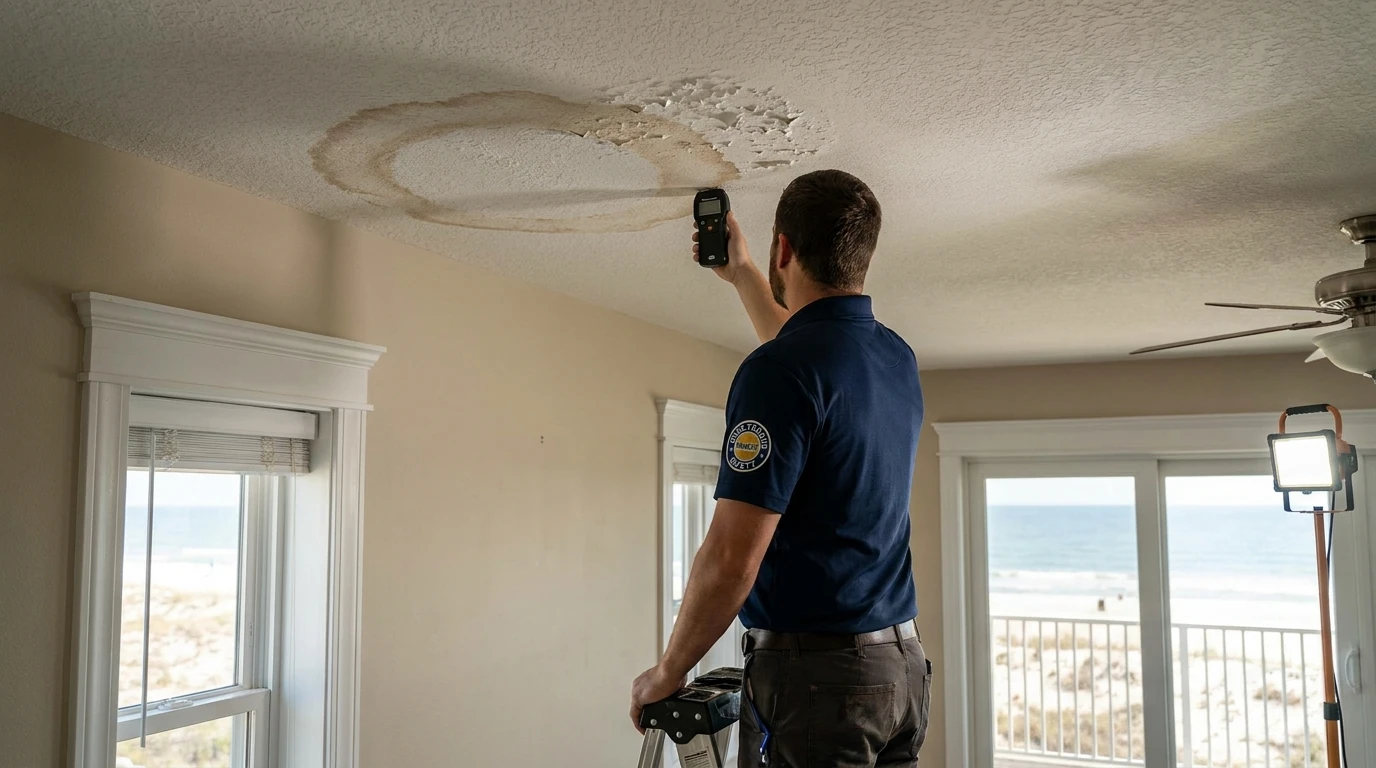
Ceiling water damage usually shows up as a yellow-brown ring with a darker edge, sometimes with bubbling or peeling paint at the center. The stain is mineral and tannin residue left behind after water evaporates, not the water itself, which is why a stain can look “dry” days after the leak started.
Other signs to check for: a soft or spongy spot when you press gently with a knuckle, a slight sag or dip in the ceiling plane, paint that’s cracked in a spiderweb pattern, or a musty smell in the room. In Destin condo buildings, a stain that’s centered under a bathroom or kitchen from the unit above is a common giveaway that the source is plumbing, not the roof. A stain that runs along a ceiling seam near an exterior wall more often points to a roof or flashing leak, especially after a named storm has pushed wind-driven rain under shingles or tile.
What Should You Do When a Ceiling Starts Leaking?
Stop the water at the source first, then protect the room, then document everything before you touch the ceiling. In a condo, that may mean calling the unit above or the HOA; in a single-family home, it means shutting off the supply valve to the fixture involved, or tarping a known roof leak if it’s safe to get up there.
From there:
- Move furniture and electronics out from under the wet area.
- Catch the water with a bucket or tarp, and lay towels to protect flooring.
- Relieve pressure on a bulging ceiling by poking a small hole at the lowest point of the bulge with a screwdriver, directed into a bucket. This sounds counterintuitive, but a controlled drip through a small hole is far better than an uncontrolled ceiling collapse.
- Photograph everything before cleanup starts, for your insurance file.
- Run a fan or dehumidifier in the room if you have one, but don’t assume that’s enough to dry the cavity above the drywall.
For the fuller first-day checklist, our guide on what to do in the first 24 hours after water damage walks through documentation and insurance steps in more detail.
How Do You Fix Water Damage on Ceiling Drywall?
The fix depends on whether the drywall itself got wet or just stained from below. A small, dry, cosmetic stain from a resolved leak can often be sealed with an oil-based stain-blocking primer and repainted in an afternoon. Drywall that absorbed water, sagged, or stayed wet for more than 24-48 hours needs to come out.
For cosmetic repairs: clean any residue, let the area fully dry, apply a stain-blocking primer (plain paint alone won’t stop the stain from bleeding back through), then repaint to match. This only works if the water source is fixed and the drywall and insulation above tested dry.
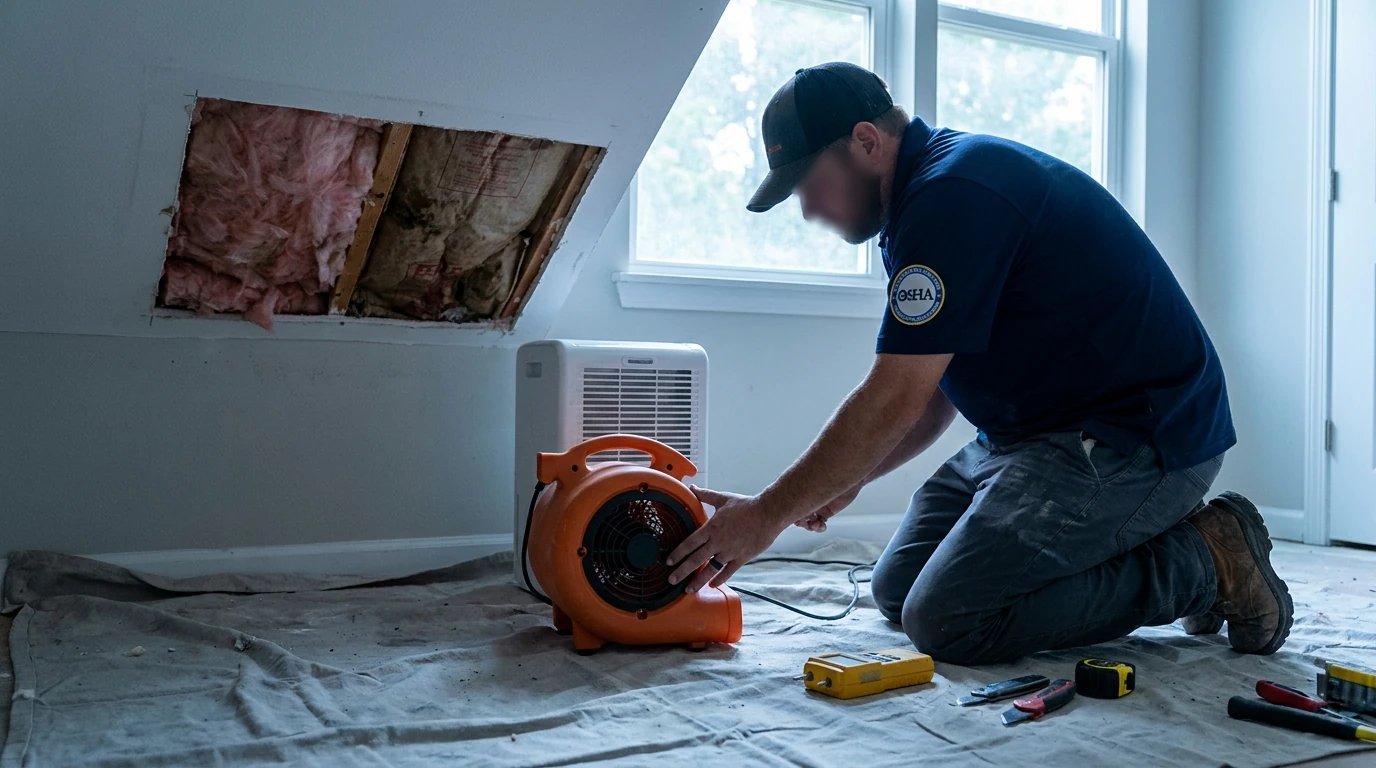
For anything beyond cosmetic, the process looks more like this:
- Confirm the moisture level with a penetrating or pinless moisture meter, not a guess. Drywall should read close to its dry standard before anyone paints or patches.
- Set up drying equipment (air movers and a dehumidifier) if the cavity is still damp, following the drying principles laid out in the IICRC S500 water damage restoration standard.
- Cut out damaged drywall to sound, dry material, typically extending about 12 inches past the visibly affected area since moisture travels further than the stain shows.
- Replace wet insulation above the cut-out section; wet fiberglass or cellulose loses its R-value and stays a moisture reservoir.
- Patch, prime, and paint once everything underneath has verified dry.
This is the stage where a lot of homeowners patch too early. A ceiling that looks dry on the surface can still be wet in the insulation or framing above it, and painting over that just traps moisture against new drywall.
When Does a Stained Ceiling Need to Be Opened Up?
A stained ceiling needs to be opened rather than just patched when moisture readings stay elevated after 24-48 hours of drying, when the stain keeps reappearing in the same spot, or when there’s visible sagging, soft drywall, or a musty odor. Those signs mean water is still trapped above the surface you can see.
In our service area, two patterns show up constantly. The first is a Destin or Miramar Beach condo unit with a ceiling leak tracing back to a failed supply line, water heater pan, or AC condensate drain in the unit above, something that often isn’t fully resolved until building maintenance or a plumber addresses the source unit, not just the ceiling below it. The second is a roof or flashing leak after a Gulf Coast storm, where wind-driven rain gets past shingles or tile and tracks along rafters before it ever shows up as a stain, meaning the visible mark is often several feet from the actual entry point.
If you’re dealing with the second pattern, our storm damage restoration team can trace the water path and coordinate with roofers on the repair side, while handling the interior drying and moisture documentation your insurance adjuster will want to see.
Does Ceiling Water Damage Cause Mold?
Yes, mold can begin growing on wet drywall, insulation, and framing within 24 to 48 hours, according to the EPA’s guidance on mold and moisture. A ceiling cavity is a particularly easy place for it to take hold, because it’s dark, often has limited airflow, and homeowners can’t see the backside of the drywall to check.
The risk goes up the longer a leak goes unaddressed, especially in Florida’s humidity, where ambient moisture already pushes materials closer to the threshold mold needs to grow. If a ceiling has been wet for more than two days, stayed damp behind a cosmetic patch, or there’s a musty smell that doesn’t go away after drying, that’s worth a closer look before anyone finishes the repair. Our team is Florida-licensed as a mold assessor and remediator through the DBPR, and can test and address growth in the same visit if the drywall is already open.
If you want more background on what growth actually looks like versus ordinary staining, see our post on the signs of hidden mold.
Most ceiling leaks fall into one of two camps: a quick stain-block-and-paint job once the source is fixed, or a project that needs the cavity opened, dried to a verified standard, and checked for growth before it’s closed back up. If you’re not sure which one you’re looking at, that’s exactly the call to make before you reach for a paint roller.
About Veterans Remediation & Restoration
Veterans Remediation & Restoration is a veteran-owned company founded in 2020, serving Freeport, Destin, and the surrounding Florida Gulf Coast. The company is licensed in Florida as a mold assessor and remediator through the DBPR, with an OSHA-trained crew handling water removal, water damage restoration, storm damage restoration, and mold remediation across the region, available 24/7 for active leaks and storm-related damage.
SERVICE-SCOPE RULE (internal note, not for publication): omitted from output.