TL;DR: Water damage restoration in Florida typically costs between $1,200 and $8,500 for a single-room leak, and $10,000 or more for a multi-room or Category 3 flood. The biggest cost drivers are the water category (clean, gray, or black water), how many square feet are affected, how many days of equipment the drying takes, and whether flooring or drywall has to come out. Most homeowners insurance policies cover sudden, accidental water damage, though the final bill depends heavily on how fast the water is extracted.
If a water heater let go in the garage last night, or a supply line under the kitchen sink has been dripping into the subfloor of your Freeport home for who knows how long, the number you actually want is a range you can hold your breath around. Coastal Florida homes near Choctawhatchee Bay deal with humidity that most of the country doesn’t, which changes how fast a wet wall turns into a bigger problem. Here’s what actually moves the price on a water damage job in this part of the Panhandle, and what tends to surprise people when the invoice arrives.
How Much Does Water Damage Restoration Cost in Florida?
Most Florida homeowners pay between $1,200 and $8,500 for a typical single-room water damage restoration job, with whole-home or Category 3 flooding jobs running $10,000 to $25,000 or more. The wide range exists because “water damage” covers everything from a slow toilet leak in a half-bath to two feet of storm surge in a first-floor living area.
A small, quickly caught leak that stays contained to one bathroom or closet, and involves clean (Category 1) water, sits at the low end. A flooded first floor with Category 2 or 3 water, saturated flooring, and drywall that has to be cut out and replaced sits at the high end. Square footage affected is the single biggest multiplier: a 150 square foot bathroom and a 900 square foot open-concept living area are not the same job, even if the water source looks identical.
The IICRC S500 standard is the industry reference restoration crews use to classify water damage and set drying protocols, and it’s a big part of why pricing isn’t a flat rate: the category and class of the loss dictate the equipment, PPE, and drying time required, and all three cost money.
What Drives Water Damage Restoration Pricing?
Six factors set the price on a water damage job: water category, class of drying, affected square footage, days of equipment runtime, materials that need replacing, and how fast the water was caught.
Water category matters most. Category 1 (clean water, like a supply line break) is the cheapest to remediate because materials can often be dried in place. Category 2 (gray water, from appliances or aquariums) usually means removing some porous materials like carpet pad. Category 3, also called black water, includes sewage backups and floodwater, and it requires removing and disposing of affected porous materials rather than trying to dry them, which adds labor and disposal cost.
Class of drying (1 through 4, per the IICRC scale) describes how much moisture is in the materials and how hard the space will be to dry. A Class 4 loss, with water trapped in low-permeance materials like concrete or hardwood, needs specialty drying mats and longer equipment runtime than a Class 1 loss.
Square footage and days of equipment stack directly. Air movers, LGR dehumidifiers, and air scrubbers are typically billed per unit per day, and a standard structural dry-out runs three to five days. A larger affected area needs more units running longer, which is the line item that surprises people most on a final invoice.
Materials affected is the other big swing factor. Drywall, insulation, baseboard, and flooring that can’t be dried in place have to be removed, disposed of, and eventually replaced, which is a separate reconstruction cost layered on top of mitigation.
Water Damage Restoration Cost by Scenario
| Scenario | Typical Cost Range |
|---|---|
| Small bathroom or closet leak, Category 1, caught within 24-48 hours | $1,200 - $3,000 |
| Kitchen or laundry appliance leak, Category 2, some drywall removal | $2,500 - $5,500 |
| Single room, flooring and drywall replacement needed, Category 2-3 | $4,500 - $8,500 |
| Multi-room flooding from a burst pipe, Category 2 | $7,000 - $15,000 |
| Category 3 (black water) flooding, one full floor | $10,000 - $25,000+ |
| Typical per-square-foot drying cost, Category 1-2 | $3.75 - $7.50 per sq ft |
Every loss is different, and these ranges reflect typical industry pricing across the region, not a quote. Veterans Remediation & Restoration provides a written scope of work before any drying equipment goes in, so homeowners in Freeport, Destin, and Niceville know what they’re agreeing to before the meter starts running.
Does Insurance Pay for Water Damage Restoration?
Most Florida homeowners policies cover sudden and accidental water damage, like a burst pipe or a failed appliance hose, but they typically exclude damage from long-term leaks, flooding, or lack of maintenance. That distinction is where most claim disputes start.
A pipe that bursts overnight and floods a hallway is usually a covered peril. A slow leak under a sink that’s been dripping for six months and caused rot is often treated as a maintenance issue and denied. Flood damage from storm surge or rising water is not covered under a standard homeowners policy at all; that requires a separate flood policy through the NFIP or a private carrier, which matters a great deal for homes near Choctawhatchee Bay and the LaGrange Bayou area where storm surge risk is real.
The Florida Office of Insurance Regulation publishes consumer guidance on what’s typically covered and how to file a complaint if a claim is handled unfairly. Documentation is what protects a claim: photos before any cleanup starts, moisture readings, and a detailed scope of work from the restoration company. That’s covered in more depth in our guide on whether homeowners insurance covers water damage.
What Happens During the Restoration Process?
A standard water damage restoration job runs through four phases: inspection and water categorization, extraction, structural drying, and repair.
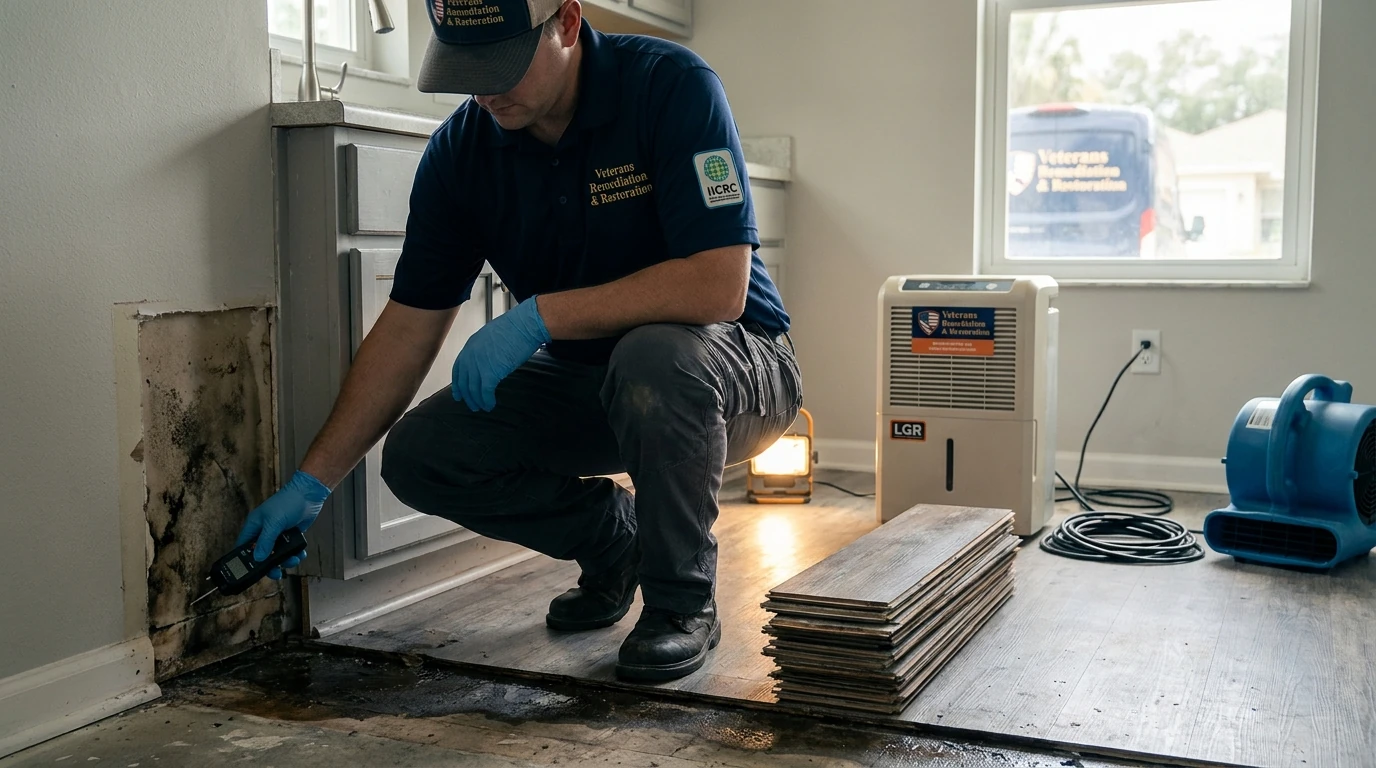
- Inspection and categorization. A technician identifies the water source, classifies the category (1, 2, or 3) and class of loss, and maps the affected area with a moisture meter and thermal imaging where useful.
- Extraction. Standing water is pulled with truck-mounted or portable extraction equipment. The faster this happens, the less material has to be removed later, which is the single biggest cost-control move a homeowner can make.
- Structural drying. Air movers and LGR dehumidifiers are set based on the class of loss, typically running three to five days, with daily moisture readings to confirm materials are drying on schedule rather than just guessing at a timeline.
- Repair and reconstruction. Drywall, flooring, baseboard, and insulation that couldn’t be saved get replaced. This phase is billed separately from mitigation and is often where insurance settlement and restoration invoice meet.
Water that’s sat for more than 48 hours in Florida’s humidity also raises the odds of secondary mold growth, which is its own cost category covered in our mold remediation cost guide for Freeport.
If you’re standing in a wet room right now trying to decide whether to call it in, the honest answer is that the clock is the biggest cost driver you control. A moisture assessment the same day usually keeps a job in the lower end of these ranges; waiting a week rarely does.
About Veterans Remediation & Restoration
Veterans Remediation & Restoration is a veteran-owned, locally owned restoration company serving Freeport, FL and the surrounding Emerald Coast, including Destin, Niceville, and Fort Walton Beach, since 2020. The company is licensed and insured, and its crews are OSHA trained. Veterans Remediation & Restoration handles water damage restoration, water cleanup, fire damage restoration, storm damage restoration, and mold remediation, and is available 24/7 for restoration emergencies.