24/7 Emergency Sewage Cleanup and Sanitization in Freeport
24/7 emergency sewage cleanup and sanitization in Freeport and surrounding areas. Insurance billing accepted. Call (337) 344-1248.
Sewage backup in your Freeport home? Raw sewage carries bacteria, viruses, and parasites that start posing a health risk the moment they touch flooring, drywall, or belongings. Call now, we answer 24/7, and get the contaminated area isolated before anyone in the household tracks it further through the house.
A sewer line backup or septic overflow is not a job for a wet vac and a mop. Category 3 water (the industry term for grossly contaminated water, which includes all sewage) requires removal of porous materials it has touched, controlled disposal, and sanitization that goes well past surface cleaning. Whether the source is a backed-up main line, a failed septic field, or a sewage ejector pump that quit during a storm, the handling is the same: contain it, remove it, treat what’s left behind.
What sewage cleanup and sanitization actually involves
Sewage cleanup starts with identifying how far the contamination has traveled, not just where it’s visible. Water carrying sewage wicks into subfloor, baseboards, and wall cavities faster than clean water because of its density and the organic load it carries. Carpet, carpet pad, and most drywall that have been in contact with raw sewage get removed and bagged for disposal rather than cleaned, because porous materials hold bacteria in ways no surface sanitizer reaches. Hard surfaces, framing, and subfloor that can be saved go through extraction, antimicrobial treatment, and structural drying with the same monitoring used on any Category 3 water loss. Depending on how much material needs to come out and how long drying takes, a sewage cleanup can run from a few days for a contained bathroom overflow to a week or more for a whole-home sewer line backup.
Our process
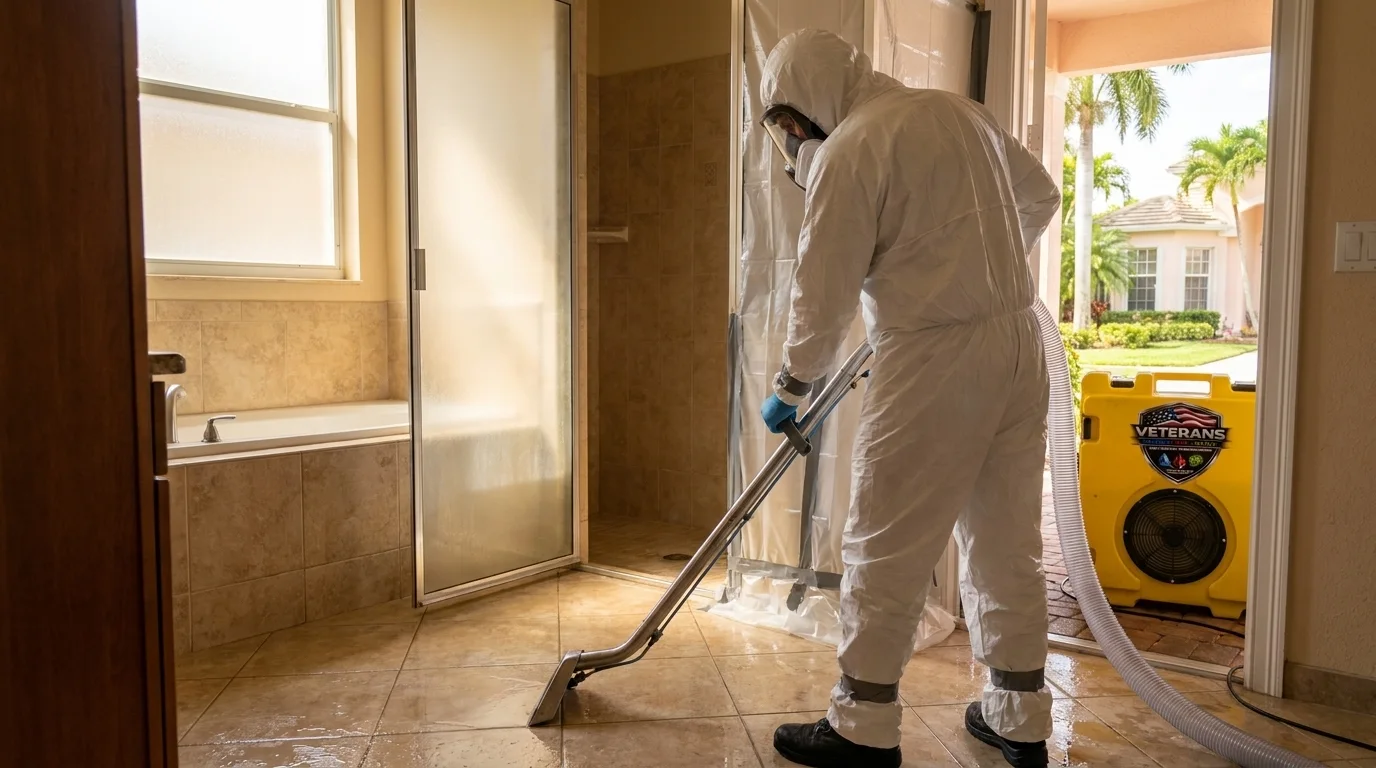
- PPE and containment staging. Crews suit up in protective equipment appropriate for raw sewage exposure and seal off the affected area to stop cross-contamination into clean parts of the home.
- Sewage and standing water extraction. Pumps and extraction equipment remove standing sewage and wastewater, with contaminated water and solids disposed of per local wastewater handling guidelines.
- Removal of contaminated porous materials. Carpet, pad, insulation, and affected drywall are cut out and removed, since these materials can’t be reliably sanitized once sewage has penetrated them.
- Antimicrobial and enzymatic treatment. Remaining structural materials are treated with EPA-registered antimicrobials and, where organic residue is present, enzymatic cleaners that break down waste matter before it’s rinsed and dried.
- Structural drying and clearance. Air movers and dehumidifiers bring moisture content down per the IICRC S500 standard, with monitoring until readings confirm the structure is dry and safe to rebuild.
What separates a good sewage cleanup response from a bad one
The most common mistake in sewage cleanup is under-removal: cleaning surfaces that look fine while leaving contaminated subfloor or wall cavity material in place because it’s out of sight. Sewage travels along the path of least resistance, which often means it’s gone further up a wall or further under flooring than the visible stain suggests. A thorough response checks moisture and contamination beyond the obvious wet line, not just where water is pooled.
Another gap is treating a sewage loss like a clean water loss and skipping the antimicrobial and enzymatic step entirely, relying on drying alone to solve a biological contamination problem. Drying addresses moisture; it does nothing for bacterial load. Insurance adjusters reviewing a sewage claim typically look for documented moisture readings, photos of material removal, and a clear record of what was disposed of versus what was treated and dried in place. That documentation is also what supports the claim if a hidden problem surfaces later.
What does sewage cleanup and sanitization cost?
Costs vary with how much of the home was affected, how far the water traveled, and how much material has to be removed versus treated. Every loss is different, which is why Veterans Remediation & Restoration provides a written scope before work begins rather than a flat estimate. Homeowners insurance often covers sudden sewer backups and septic failures under the dwelling or water damage portion of a policy, though coverage can depend on whether a backup rider is included, so it’s worth checking your specific policy.
| Scenario | Typical range |
|---|---|
| Single bathroom, contained overflow | $800 - $2,500 |
| One room with carpet and drywall removal | $2,000 - $5,000 |
| Sewer line backup affecting multiple rooms | $4,500 - $12,000 |
| Whole-home sewage event with structural drying | $10,000 - $25,000+ |
| Septic field failure with interior backup | $6,000 - $18,000 |
Seasonal & regional considerations
Freeport’s mix of older septic systems and newer homes tied into county sewer lines means backups show up for different reasons depending on the neighborhood. Heavy rain events common to the Florida Panhandle can saturate septic drain fields and push sewage back into the home through drains and toilets, while root intrusion and aging clay pipe in older sections of town are more likely culprits for a sewer line backup. Either way, standing floodwater combined with a failed system raises the contamination level of what’s sitting in the home, which is part of why fast containment matters.
Service area
Veterans Remediation & Restoration handles sewage cleanup and sanitization for homes and businesses in Freeport and throughout the surrounding Walton County area, including nearby communities along the Highway 331 corridor.
If sewage has backed up into your home, don’t wait on it to dry on its own. Call Veterans Remediation & Restoration now to begin containment and sanitization before the contamination spreads further.
Frequently Asked Questions
Does homeowners insurance cover sewage backup cleanup?
Why can't carpet and drywall touched by sewage just be cleaned and reused?
What's the difference between a sewer line backup and a septic overflow?
How long does sewage cleanup and sanitization typically take?
What should I do while waiting for a sewage cleanup crew to arrive?
Looking for the best sewage cleanup and sanitization company in Freeport?
Veterans Remediation & Restoration provides sewage cleanup and sanitization in Freeport, FL and the surrounding area, and has served local property owners since 2020. We answer calls 24/7 — call (337) 344-1248 for immediate help.
Need Sewage Cleanup and Sanitization now?
We respond 24/7 across Freeport and surrounding FL cities.
Related Coverage
- Our Restoration Services
- Contact Veterans Remediation & Restoration
- Restoration Services in Crestview
- Restoration Services in DeFuniak Springs
- Restoration Services in Destin
- Restoration Services in Ebro
- Restoration Services in Eglin AFB
- Restoration Services in Fort Walton Beach
- Restoration Services in Harold
- Restoration Services in Hurlburt Field
- Restoration Services in Laurel Hill
- Restoration Services in Miramar Beach
- Restoration Services in Navarre
- Restoration Services in Niceville